SimbusVelo: Smartest Fashion Replenishment in 2026
Most Indian fashion brands place the bulk of their bets for a season long before anyone has bought a single piece. By the time the range reaches stores, the options are fixed and the size ratios are packed into cartons. After that, customers get the final say, and they may not agree with the plan.
I led planning teams at Madura, Arvind and later at Pepe Jeans, and I saw this happen to a varying degree every season. We were making calculated guesses, five or six months out, about which shirt in which size would sell in which store. Nobody can do that reliably.
Here’s why this way of buying keeps going wrong, and what I think works better.
How the buy actually gets made
It takes six to nine months to get a style from design to shelf, and then it has maybe twelve weeks to sell. A 2025 report by Vector Consulting Group and NIQ, From Threads to Trends, found that lead times like these push brands to plan collections a year ahead.
Everything in that buy rests on a forecast for products with zero sales history: how many options, how deep, what ratio of sizes. In week one, the initial allocation goes out by store grade and gut feel, and a big chunk of the warehouse lands in stores in one go.
After that, the plan mostly stays put. Replenishment runs off a weekly chain-level WSSI review, so you’re always looking at last week. Some retailers are trying to shorten the cycle. Lifestyle International has said it cut order lead times from six or seven months to two or three to respond to real demand.
What it looked like from the planning desk
What stuck with me wasn’t that the forecast missed. It was the way it missed in both directions at once.
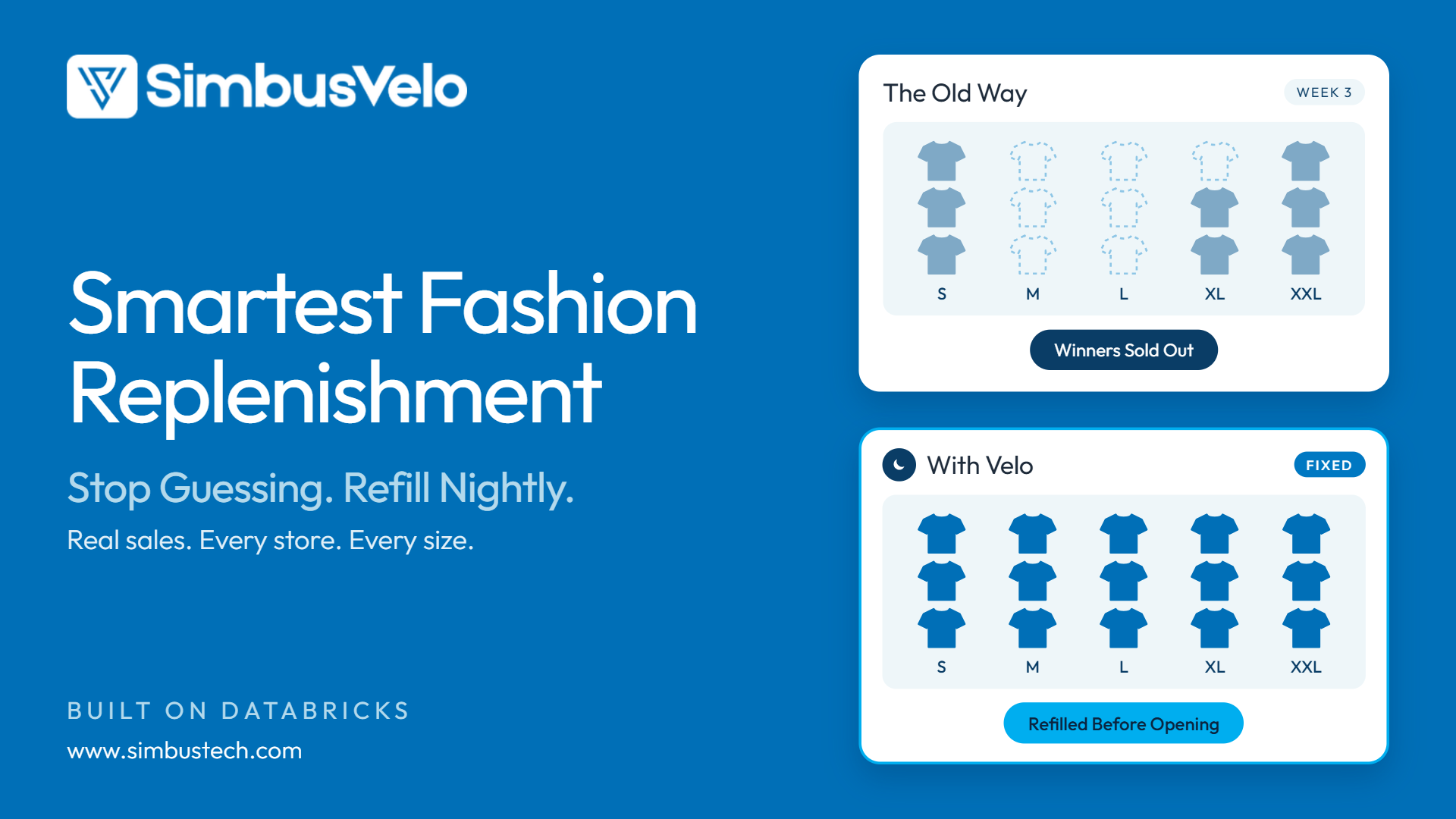
Every season a few styles would just take off. Sometimes it was a chino in a colour we’d nearly cut from the range, sometimes a casual shirt nobody in the buying meeting was excited about. Two or three weeks in, the M and L would be gone from our best stores while the S and XXL were still hanging there. Someone who walked in asking for that shirt in their size either picked something else or left.
Meanwhile, other options barely moved, holding on to fixture space the new drops needed.
The reports made it worse. Once a style sold out of its core sizes, its sales dropped, and on paper it looked like it was cooling off. We’d run out of it, and the data told us people had stopped wanting it.
Fixing any of this meant transfers and restocks done by hand, store by store, in spreadsheets. By the time we got through the list, much of the selling window had gone. The Vector and NIQ report describes the same pattern across the industry: in-season fixes tend to be manual, reactive and slow.
Why it all ends up in the sale
Put those two things together and you can more or less predict how the season will close. The bestsellers went at full price weeks ago. The slow lines are still in stores, and EOSS is how they get cleared.
So it’s no surprise that 30 to 40% of apparel stock ends up in the end-of-season sale, according to the Vector and NIQ report, which also puts size-set breakage at 20 to 40%. It’s what happens when you commit early and correct late.
The frustrating part is that the signal already exists. Every store’s POS reports what sold, every day. Most brands just can’t act on it at store, option and size level fast enough.
A different starting point: what actually sold
I’ve stopped believing a smarter forecast will fix this. Demand at that level is too noisy. What helps is needing the forecast less.
That’s the idea behind SimbusVelo. Rather than sending most of the buy to stores in week one, Velo holds depth back at the warehouse and starts stores off lighter. Every night it tops each store and option back up to a Theory of Constraints buffer, based on that day’s actual sales. If something sold today, it’s on its way back tonight.
Velo calculates rate of sale while leaving out days a size was out of stock, so a winner that ran out isn’t mistaken for a slow seller. It works inside your option plan, fixture space and fashion-bucket limits. For each look, it picks one of three moves: replenish a winner, replace a dead option with a similar style that’s selling, or pull back something that isn’t moving.
Velo is built on Databricks and runs end to end on the Databricks Lakehouse. That lets it work through every store, option and size overnight, find lookalike styles from product images, and answer managers’ questions in plain English through Databricks Genie. It plugs into your existing ERP and WMS, with orders in before stores open.
In its implementation with a leading Indian menswear retailer, Simbus reports 22% higher full-price sell-through, 34% lower markdown spend and a 15 to 20% better in-store in-stock rate.
The season doesn’t have to be settled before it starts. To see it with your own numbers, ask the Simbus Velo team for a free sell-through and availability health check.
Sources
- Vector Consulting Group and NIQ, From Threads to Trends: Navigating Supply Chain Complexity in Apparel Retail (Feb 2025), as reported by InFashion Business
- DFU Publications, Lower margins, reduced sales, inventory pile up (Feb 2024)
- Simbus Technologies, Simbus Velo product page